

What are the most common capsule manufacturing defects?
The most common capsule manufacturing defects are uneven fill weight, dented, cracked or split shells, powder leaking from the capsule, clumping inside the shell, and color changes. Most of them start early, in the ingredients, the blend, the shells or the room conditions, not at the filling machine. A cGMP plant catches them with checks at every step of the capsule manufacturing process instead of testing only at the end.
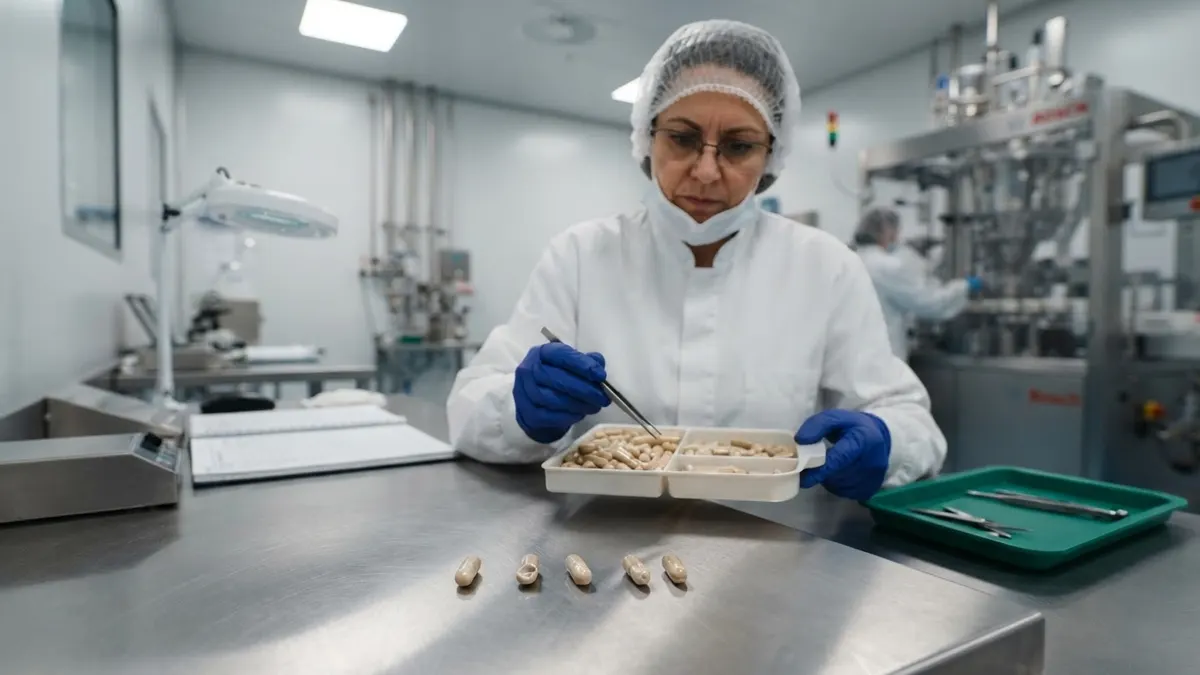
If you have opened a bottle from a past supplier and found loose powder, a few crushed capsules or a brown spot that should not be there, you are not alone. These problems have causes, and each cause has a check that should have caught it.
Here are the defects this guide covers, so you can jump to the one you are dealing with:
- Weight variation: capsules that do not all hold the same amount of powder.
- Cracked, dented or split shells: damage to the capsule itself.
- Powder leakage: fine powder escaping from the seam or a split.
- Clumping: powder that cakes or hardens inside the shell.
- Discoloration and spotting: shells or fill that change color over time.
- Odor or taste changes: often an early sign of the same moisture or reaction problems.
How capsules are made, and where defects creep in
To see where a defect comes from, it helps to know how capsules are made. The capsule making process runs in eight stages: raw material testing, weighing, blending, encapsulation, polishing, inspection, bottling and labeling, and release testing.
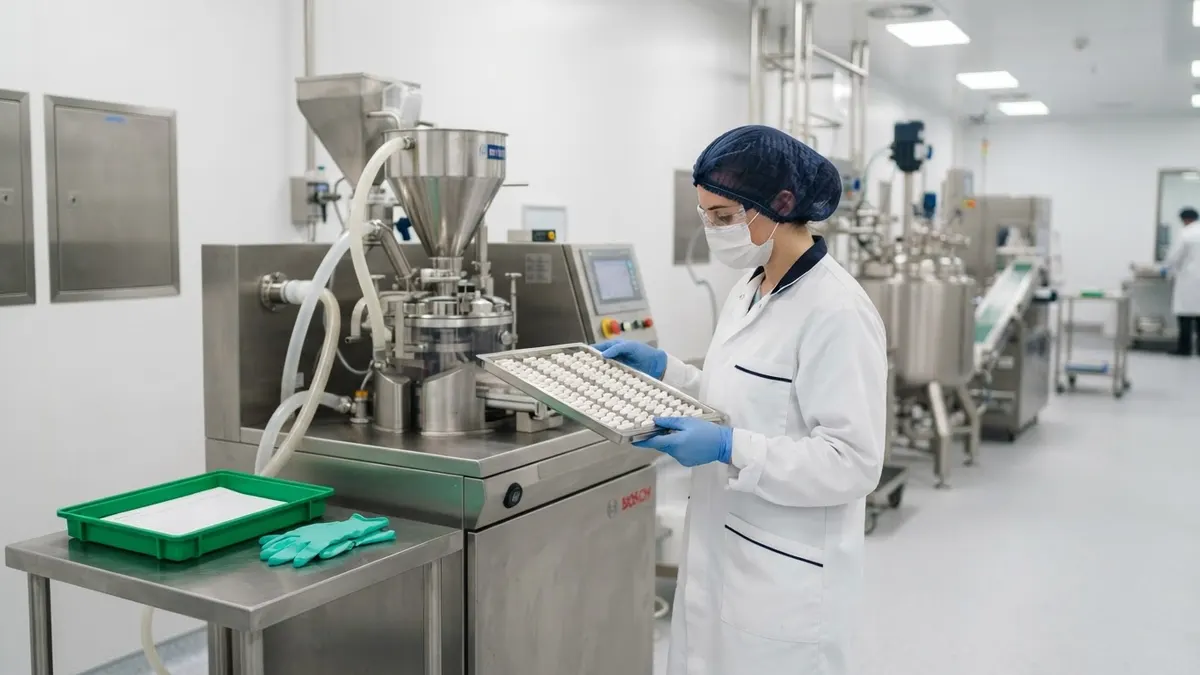
Each stage can introduce a problem. Each stage also has a check that stops it from moving forward.
| Step | Defects that can start here | Check that catches them |
|---|---|---|
| 1. Raw material testing | Wrong or low-quality ingredient, unexpected moisture, very different particle sizes | Each incoming ingredient is held and checked for identity and quality before use |
| 2. Weighing | Too much or too little of an ingredient, mixed-up lots | Weighing to the master formula, recorded by lot number |
| 3. Blending | Uneven blend, ingredients separating, poor flow | A set blending procedure and a check that the blend is even before filling |
| 4. Encapsulation | Weight variation, dents, split shells, caps not fully closed | Weight and appearance checks during the run, with machine settings recorded |
| 5. Polishing | Loose powder left on the outside of capsules | Polishing removes it; visual checks confirm it |
| 6. Inspection | Damaged or under-filled capsules reaching the bottle | Removal of damaged or under-filled capsules and weight checks |
| 7. Bottling and labeling | Moisture pickup, clumping later in storage, wrong counts | Count checks, seals, caps and moisture protection such as desiccants |
| 8. Release testing | A finished product that does not match its specification | Testing against the product specification before it ships |
The order matters. A wrong ingredient caught at step 1 costs one returned drum. The same problem found at step 8 costs the whole batch, the shells, the bottles, the labels and weeks of delay to your launch date.
For a full walk-through of each stage and what your brand supplies at each point, see our guide to the capsule manufacturing process, step by step.
What causes capsule weight variation?
Weight variation means some capsules hold more powder than others. It is the most common capsule defect and often the most costly, because it touches the label claim directly.
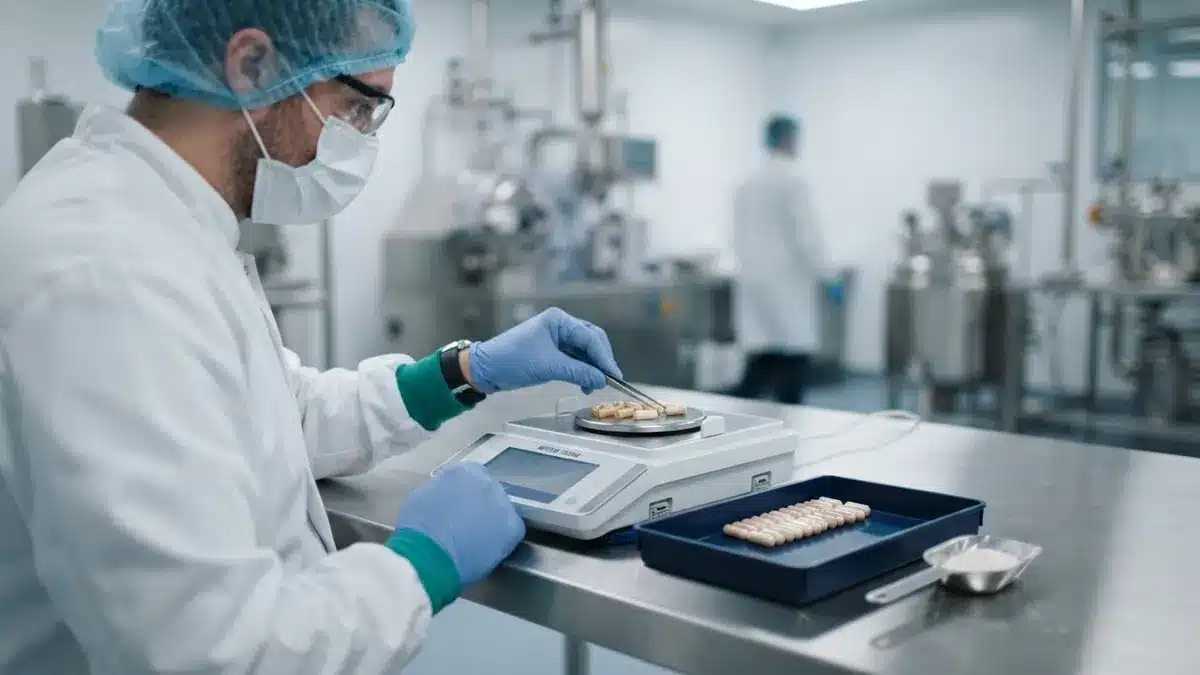
Here is a simple way to see why. Say your serving is two capsules and the label states 1,000 mg of blend per serving. Each capsule should hold 500 mg. If a share of capsules run 10% light, those hold 450 mg, and a serving made from two of them holds 900 mg. That serving no longer matches the label. Run the same sum with your own serving size and dose to see what a small drift means for your product.
Poor powder flow
Filling machines measure powder by volume. They rely on the blend flowing into the same space the same way every time. Sticky, light or fluffy ingredients do not. Many botanical powders and extracts fall into this group. They bridge, cling to the machine or pack loosely, and each capsule ends up with a slightly different amount.
An uneven blend or very different particle sizes
When fine and coarse particles sit in the same blend, they can separate while the machine runs. Vibration pushes the fine particles down and the coarse ones up. The fill weight drifts across the run, and the dose of each ingredient can drift with it. This is why the blending step, and sometimes milling or screening, matters so much.
Machine setup, wear and capsule size
Dosing parts wear over time, and settings shift. A machine that is not set up for the specific blend will fill unevenly from the first capsule. Capsule size also plays a part. A blend that is too dense for the chosen size can overfill and strain the shell. A blend that is too light may not reach the target dose at all, which forces a larger capsule or more capsules per serving.
Why it matters to your brand
- Label claims: the amount in the bottle should match the amount on the label.
- Customer trust: people notice when capsules feel or look different from one bottle to the next.
- Marketplace complaints: on Amazon and other marketplaces, quality complaints can follow a listing for a long time.
How it is caught
A well-run plant checks fill weights at regular points during the run, not only at the end. Each check has clear limits. When a check falls outside them, there is a written action: stop, adjust, recheck and record what happened. Ask your manufacturer how often they weigh capsules during a run and what happens when a check fails.
Why do capsules crack, dent or split?
Shell damage usually comes down to moisture, handling or both.
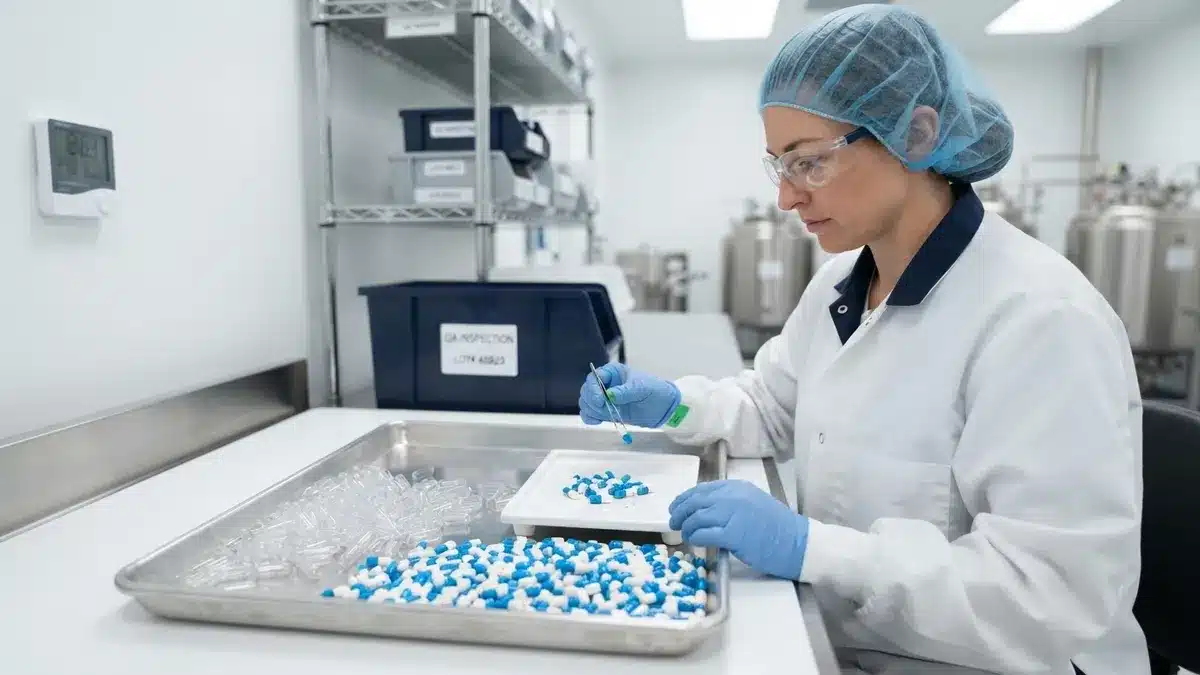
Moisture in the shell
Capsule shells hold a small amount of water, and that water keeps them flexible. Shells that dry out turn brittle and crack. Shells that take on moisture go soft, sticky and easy to dent. The fill can play a part too. Some ingredients pull moisture out of the shell, which can make a capsule brittle from the inside even when the room is fine.
Room temperature and humidity
Shells react to the air around them in storage and on the production floor. That is why a strong cGMP plant keeps temperature and humidity within set ranges in the areas where shells are stored and filled, and records those conditions in the batch record. If a batch shows cracking, those records help find the cause.
Overfilling and closing force
Pushing too much powder into a shell, or pressing the two halves together with too much force, can split the shell at the seam or dent the cap. This links back to capsule size. A blend that barely fits the chosen size puts strain on every capsule.
Gelatin or plant-based shells?
Gelatin and plant-based shells behave differently. Gelatin shells depend more on their water content, so they are more likely to turn brittle when dry and soft when humid. Plant-based shells generally hold less moisture and tend to stay flexible in drier conditions, which can suit moisture-sensitive fills. Each has trade-offs in cost, look and how it runs on the machine. The right choice depends on your formula, not on the label claim alone.
How it is caught
Visual inspection after filling removes damaged capsules before bottling. Inspection is a safety net, though. If many capsules are being removed, the real fix sits upstream in storage, shell choice or machine setup.
Why do capsules leak powder, clump or change color?
These are the defects brands often notice once a bottle has been opened, sometimes weeks after it shipped.
- Powder leakage: the halves are not fully locked, the blend is very fine and works through the seam, or a shell has split. Polishing removes loose powder from the outside of each capsule, but it cannot fix a poor seal.
- Clumping: some ingredients pull in moisture from the air. Over time the powder cakes and hardens inside the shell. Good seals, the right bottle and desiccants protect the product after it leaves the plant.
- Discoloration and spotting: ingredients can react with each other, with moisture or with the shell. The result can be brown spots, faded color or a mottled look. A stability check during development shows how the product holds up over time before you commit to a full run.
- Odor or taste changes: a stronger smell or a new taste is often the first sign of the same moisture or reaction problems.
Formula issue or process issue?
Knowing which kind of problem you have tells you where to fix it:
- Fix in development: ingredients that react with each other, a blend that pulls in moisture, a fill that does not suit the shell type.
- Fix on the floor: caps not fully closed, uneven fill weights, shells stored in the wrong conditions, missing seals or desiccants.
How do manufacturers inspect capsules during production?
A cGMP plant does not wait for the finished product to find problems. It runs checks before, during and after filling, so defects are stopped where they start.
Before the run
- Each incoming ingredient is held and checked for identity and quality before use, instead of relying on the supplier’s certificate of analysis alone.
- Supplier paperwork is reviewed against the ingredient specification.
- Each ingredient is weighed to the master formula and recorded by lot number.
During the run
- Fill weights are checked at set points against clear limits.
- Capsules are checked for dents, splits and caps that are not fully closed.
- Machine settings and any adjustments are recorded in the batch record.
After filling
- Polishing removes loose powder from the outside of each capsule.
- Inspection removes damaged or under-filled capsules and checks weights.
- Release testing checks the finished product against its specification before it ships.
Why the batch record matters
Under cGMP, each step has a written procedure and each batch has a record. That record shows what went into the batch, who handled it and what the tests showed. For dietary supplements sold in the U.S., these rules sit in 21 CFR Part 111. When something goes wrong, the record is how you trace it to the cause instead of guessing.
A quick checklist to compare against your supplier
- Incoming ingredients tested before use
- Weighing recorded by lot number
- Fill weight checks during the run, with written limits and actions
- Visual checks for shell damage
- Machine settings recorded
- Inspection before bottling
- Release testing against a written specification
- A batch record you can request
Mistakes brands make that lead to capsule defects
Not every defect starts at the plant. From the production floor, these are the brand-side decisions that most often cause trouble later:
- Choosing a capsule size before testing how the blend fills. The dose has to fit the shell at the blend’s real density, not on paper.
- Changing the formula or an ingredient source after the trial run without telling the manufacturer. A new supplier’s powder can flow, pack and react differently even when the ingredient name is the same.
- Picking a shell type for the label claim alone. A shell that sounds right on the front panel may not suit a moisture-sensitive fill.
- Skimping on packaging protection. Removing seals or desiccants to save a little per bottle can cost far more in returns and complaints.
- Judging a supplier on price per bottle. The real cost to compare is the cost of a failed or recalled batch, plus the weeks of lost sales.
The details at the start matter. Most of these mistakes are cheap to avoid in development and expensive to fix after launch.
How to tell if a manufacturer has strong quality controls
You do not need to visit a plant to judge its quality system. Ask the same questions of every supplier and write down the answers.
Questions to ask
- How often do you check fill weight during a run, and what happens when a check fails?
- Do you test incoming ingredients yourselves, or rely on the supplier’s paperwork?
- How do you store capsule shells, and do you record room conditions?
- Can I see a sample batch record and finished product test results?
Signs of a weak system
- Logos on the website, but no current certificates when you ask
- Testing only at the end, or not at all
- Vague answers about storage conditions and in-process checks
Signs of a strong system
- Current cGMP certificates with dates, shared without fuss
- Named test methods for ingredients and finished product
- Every ingredient traced to your batch
- One named contact who explains what went wrong and what changed, if something does
For more on reading certificates, see Proof of Quality: Why Certifications Count. For a full scoring method, use our checklist for choosing a private label supplement manufacturer.
Next step: get capsules made with quality built into every step
At Vitalpax, quality is built into the process, not added at the end. We are a cGMP compliant contract manufacturer working from a multi-building manufacturing campus in Southern Utah.
- In-house R&D and formulation helps match your blend, capsule size and shell type before the first run.
- Large and small batch capabilities let you start at the size that fits your stage and grow from there.
- Packaging and private label keep your product with one partner from concept to shelf.
- Several formats under one roof: capsules, powders, tablets, sachets and stick packs, and liquids. Learn more about how tablets are made if you are weighing formats.
To make a first call useful, bring:
- Your formula, or the ingredients and doses you have in mind
- Your target capsule size, capsules per serving and count per bottle
- Any defects you have seen with a past supplier
Ready to review your capsule product? Contact the Vitalpax team and we will walk through your formula, your shell choice and the checks that keep every run consistent.
Frequently asked questions
What are the most common capsule manufacturing defects?
The defects brands see most are uneven fill weight, dented, cracked or split shells, powder leaking from the capsule, clumping inside the shell, and color changes. Most start early, in the ingredients, the blend, the shells or the room conditions. A cGMP plant catches them with checks at each step instead of testing only at the end.
What causes capsule weight variation?
The usual causes are poor powder flow, an uneven blend or very different particle sizes that separate while the machine runs, and machine setup or wear. A blend that is too dense or too light for the chosen capsule size also makes fill weights drift. Regular weight checks during the run, with clear limits and written actions, catch it.
Why do capsules crack, dent or leak powder?
Shells that dry out turn brittle and crack, while shells that take on moisture go soft and dent. Overfilling or pressing the halves together too hard can split the seam. Powder leaks when halves are not fully locked, the blend is very fine, or a shell has split; polishing removes loose powder from the outside but cannot fix a poor seal.
How do manufacturers inspect capsules during production?
Before the run, incoming ingredients are held and checked for identity and quality, and each one is weighed to the master formula by lot number. During the run, fill weights and shell appearance are checked. After filling, capsules are polished, damaged or under-filled capsules are removed, weights are checked, and the finished product is tested against its specification before it ships.
How can a brand tell if its manufacturer has strong quality controls?
Ask how often fill weight is checked during a run, whether incoming ingredients are tested in-house, and whether you can see a sample batch record and finished product test results. Warning signs are logos without current certificates, testing only at the end and vague answers about storage. Strong signs are current cGMP certificates shared without fuss, named test methods and every ingredient traced to your batch.
How are capsules made, step by step?
The capsule manufacturing process runs in eight stages: raw material testing, weighing, blending, encapsulation, polishing, inspection, bottling and labeling, and release testing. Machines open the shells, fill them with the blend and close them. The capsules are then polished, inspected, bottled and labeled, and the finished product is checked again before it ships.
What is cGMP manufacturing and how does it prevent capsule defects?
cGMP stands for current Good Manufacturing Practices: written rules for clean, consistent, traceable production. Each step has a procedure and each batch has a record showing what went in, who handled it and what the tests showed; for U.S. dietary supplements these rules sit in 21 CFR Part 111. Because checks run at every step, problems are stopped where they start instead of being found in the finished bottle.
Should I choose gelatin or plant-based capsules to avoid cracking and denting?
It depends on your formula. Gelatin shells rely more on their water content, so they are more likely to turn brittle when dry and soft when humid, while plant-based shells generally hold less moisture and can suit moisture-sensitive fills. Each has trade-offs in cost, look and how it runs on the machine, so choose based on how your blend behaves, not on the label claim alone.