

Granulation in tablet manufacturing is the step that turns a fine, loose powder blend into small, even grains called granules, so the blend flows evenly into the tablet press and binds into firm tablets. It happens before compression, and it is how a manufacturer makes sure every tablet carries the same weight and the same amount of each ingredient. There are two granulation routes, wet granulation and dry granulation (slugging or roller compaction), plus a third option, direct compression, that skips granulation altogether.
This guide explains each tablet manufacturing method in plain English, shows which one suits which kinds of supplement ingredients, and lists the questions to ask before your first run. For the full production path, from formula review to bottling, see our overview of the supplement tablet manufacturing process.
What is granulation in tablet manufacturing?
Think of granulation as turning flour into couscous. Flour is fine and dusty, and it clumps in corners. Couscous pours. A tablet press needs a blend that pours.
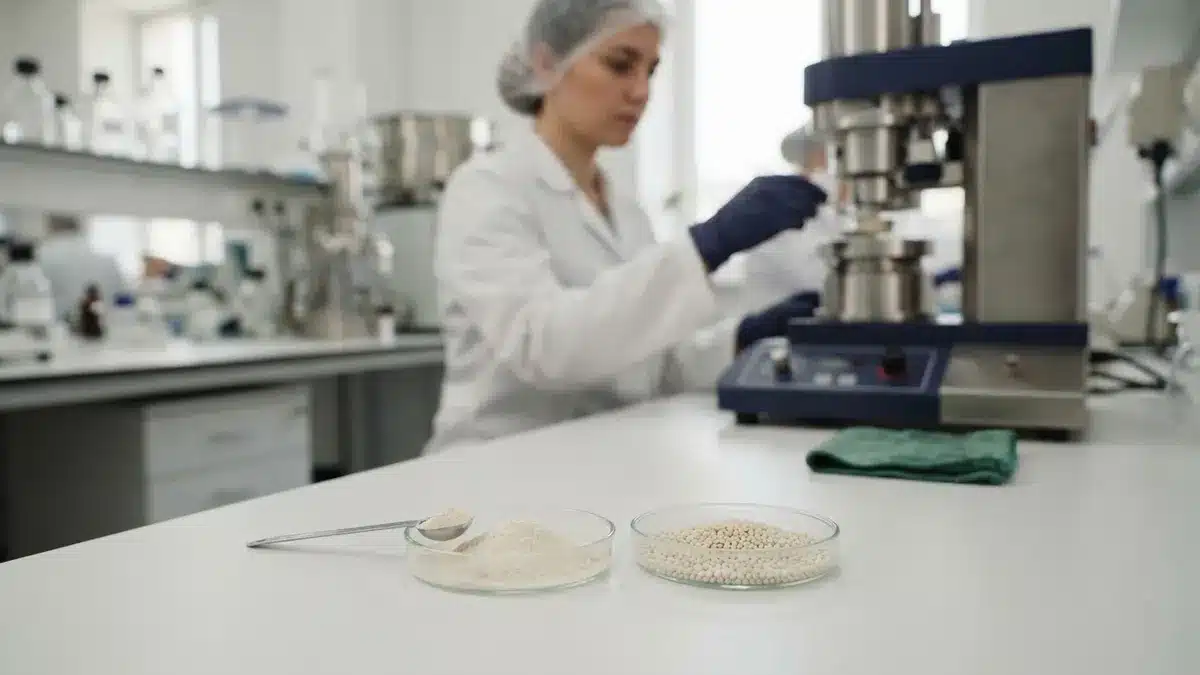
Granulation does three jobs before the pressing step:
- Better flow. Granules slide into the press evenly, so each tablet gets the same fill.
- Locked-in mix. Each granule holds a bit of every ingredient, so heavy and light particles cannot separate.
- Better binding. Granules press into tablets that hold together in the bottle.
There are three main routes to a finished tablet:
- Wet granulation: a liquid binder glues the powder into grains, which are then dried.
- Dry granulation: the powder is pressed into large pieces (slugging) or sheets (roller compaction), then broken back down into grains. No liquid.
- Direct compression: the blend goes straight into the press with no granulation step.
Which route fits depends on your ingredients, the dose per tablet and how sensitive the formula is to water and heat.
What is compression in tablet manufacturing, and why does powder need help first?
Compression is the step where a tablet press squeezes a measured amount of powder or granules between two steel punches inside a die. The press fills the die, compresses the material and pushes out a finished tablet, over and over, at high speed.
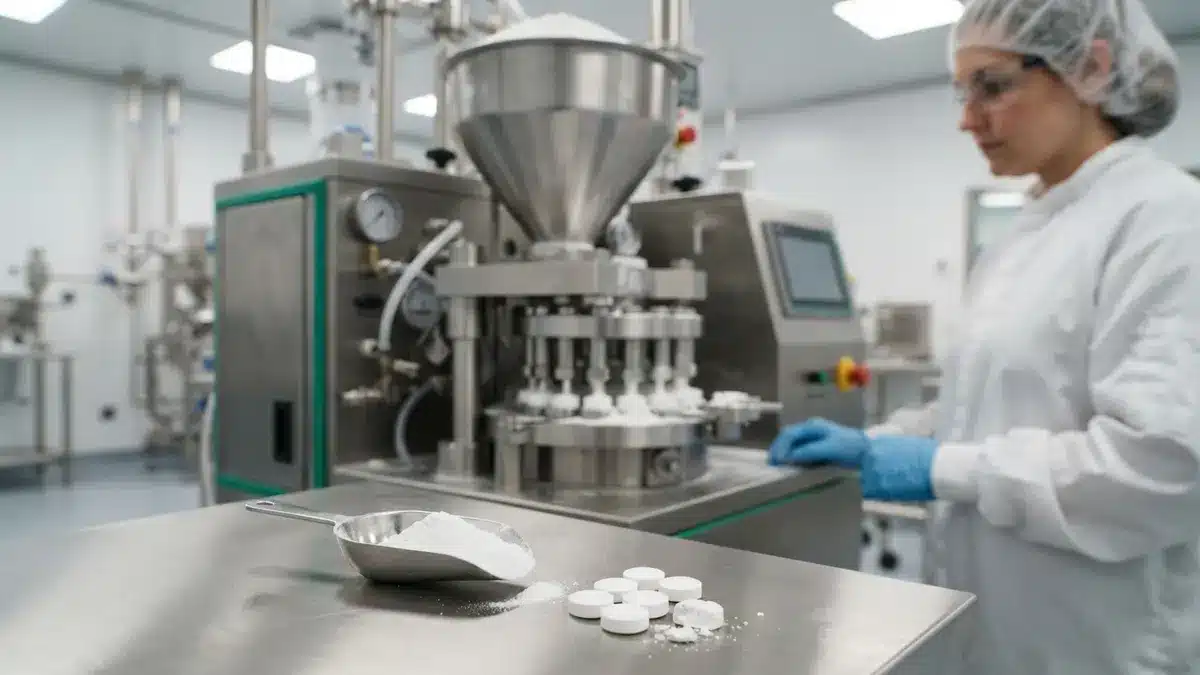
That sounds simple. The trouble is that many supplement powders were never designed to be pressed. Three problems show up again and again:
- Poor flow. Fine powders bridge, stick and pour in bursts. The die fills unevenly, and tablet weights drift up and down across the run.
- Separation. A blend with mixed particle sizes can sort itself in the hopper as it vibrates. Small, dense particles sink; large, light ones rise. Some tablets end up with more of an ingredient than others.
- Weak binding. Some powders simply do not stick together under pressure. The result is soft tablets that chip, crumble or split in two in the bottle.
Granulation fixes these problems before the blend reaches the press. Direct compression avoids them by choosing ingredients that already behave well.
Wet granulation: how it works, step by step
Wet granulation is the classic method. Here is the usual sequence:
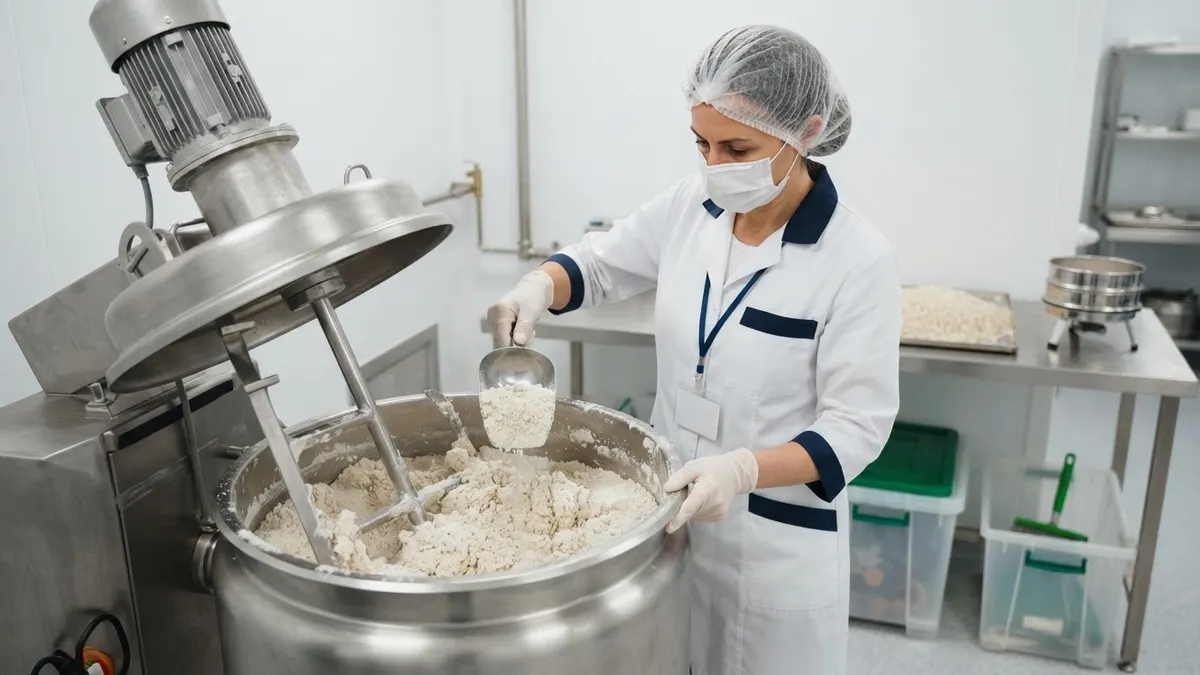
- Dry blend. The powdered ingredients are weighed and mixed.
- Add a binder. A liquid, often water or a binder solution, is added while the blend mixes.
- Form damp clumps. The powder gathers into a damp mass, a bit like wet sand.
- Dry. The damp granules are dried to remove the added liquid.
- Size. The dried grains are passed through a screen or mill so they are a consistent size.
- Final blend and press. Lubricants and any remaining ingredients are blended in, and the granules go to compression.
Why choose wet granulation?
It makes strong, even granules that flow well and press into firm tablets. It is also a good way to spread a very small amount of an ingredient evenly through a large batch, because the binder fixes each particle in place.
What are the trade-offs?
- More steps, more equipment time and more handling per batch.
- A drying stage, which adds time and needs careful control.
- A poor fit for ingredients that are damaged by moisture or heat.
What is slugging in tablet manufacturing? Dry granulation explained
Slugging is a dry granulation method. The powder blend is pressed into large, rough tablets called slugs. Those slugs are then broken up and screened into granules, which go back to the press to make the final tablets.
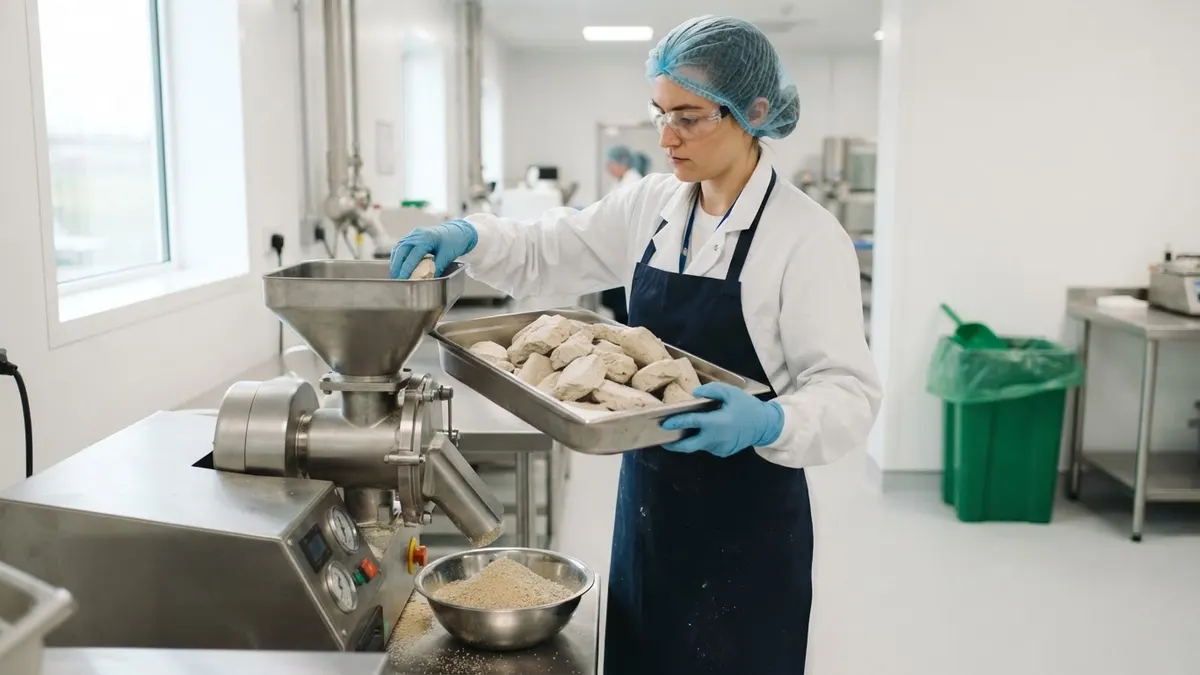
Roller compaction is the other dry method. Instead of making slugs, the blend is squeezed between two rollers into a sheet or ribbon, which is then milled into granules. It does the same job as slugging in a more continuous way.
Is slugging the same as roller compaction?
Not exactly. Both are dry granulation, and both press powder and then break it down. Slugging uses a tablet press to make slugs. Roller compaction uses rollers to make sheets. The goal and the result are similar.
When does dry granulation make sense?
It suits formulas that are sensitive to moisture or heat but still need better flow or binding than direct compression can give. No liquid goes in, and nothing needs drying.
What are the trade-offs?
- It creates more dust and fine particles, which need to be managed.
- Pressing the material twice can leave granules that press a little less firmly than wet granules.
- It still adds steps compared with direct compression.
When can a tablet be made by direct compression?
Direct compression means blending the ingredients and pressing them straight into tablets. No granulation, no water, no drying.
It works when the blend already flows well and binds under pressure. Formulators often get there by choosing ingredient grades made for this purpose, such as granulated forms of vitamins and minerals, along with fillers and binders chosen for flow and compressibility.
The appeal is clear:
- Fewer steps, so a simpler and usually faster run.
- No water or heat touching the formula.
- Less handling between blending and pressing.
It gets harder when:
- The dose is high, so there is little room left in the tablet for helper ingredients that improve flow and binding.
- The powders are very fine, sticky or fluffy, as many botanical extracts are.
- The blend mixes very different particle sizes or densities, so it tends to separate.
Which tablet manufacturing method suits which supplement ingredients?
The table below is a starting point. Use it to see where your own formula likely falls.
| Method | How it works | Often suits | Be careful with | Steps | Strengths and trade-offs |
|---|---|---|---|---|---|
| Wet granulation | Liquid binder forms damp grains, which are dried and sized | Bulky minerals and botanical extracts that flow poorly; low-dose actives that must be spread evenly | Moisture-sensitive ingredients such as probiotics and fizzing (effervescent) blends; heat-sensitive vitamins | Most | Strong, even granules; longer run and a drying stage |
| Dry granulation (slugging or roller compaction) | Powder pressed into slugs or sheets, then broken into grains | Moisture- or heat-sensitive formulas, including many effervescent blends, that still need better flow | Blends that already make dust; ingredients that lose binding when pressed twice | Middle | No water or heat; more fines, slightly softer granules |
| Direct compression | Blend pressed straight into tablets | Formulas built on direct-compression grades of ingredients; lower-dose formulas with room for helper ingredients | High-dose formulas, very fine or sticky powders, blends prone to separation | Fewest | Simple and quick; depends on ingredient choice |
A note on real formulas: very few products are one ingredient. A multivitamin can hold a bulky mineral, a heat-sensitive vitamin and a tiny-dose trace element in the same tablet. The formulation team weighs the whole blend, not one ingredient, and sometimes the answer is to change an ingredient’s form rather than the method. Live cultures add another wrinkle: high pressing force can also affect them, which is one reason probiotics are often put in capsules instead. Our guide to the capsule manufacturing process covers that format.
How does granulation affect tablet quality? A checklist and mistakes to avoid
Your customer never sees the granulation step. They see the result. Good granulation, or a well-built direct compression blend, protects four things:
- Even weight. Every tablet in the bottle weighs about the same.
- The same dose in every tablet. The label amount holds from the first tablet of the run to the last.
- Firm tablets. No crumbs, chips or split tablets at the bottom of the bottle.
- Proper breakdown. A tablet pressed too hard may not break apart well once swallowed. One pressed too soft falls apart in shipping. The method and the pressing force have to balance both.
Questions to ask your manufacturer
- Which tablet method do you plan for this formula, and why?
- How do you check tablet weight and hardness during the run, and how often?
- How do you confirm each batch matches the label amounts?
- What happens if a check fails partway through a run?
- Will you make a small trial batch before full production?
These sit alongside the broader questions in our private label supplement manufacturer checklist.
Mistakes to avoid
- Picking a method by cost alone. The method with the fewest steps is only cheaper if the tablets pass.
- Swapping an ingredient’s source or form without retesting. A new supplier’s magnesium or a different extract grade can flow and press very differently, even at the same label amount.
- Skipping trial batches. Small runs show flow, hardness and breakdown problems while they are still cheap to fix.
- Locking the tablet size too early. A high-dose formula may need a larger tablet or a two-tablet serving to leave room for the ingredients that make it press well.
The details at the start matter. A method problem found at the trial stage costs a few adjustments. The same problem found after a full run can cost the batch.
Cost, timing and trade-offs of each tablet method
Each method changes how much work goes into every batch. As a rule of thumb:
- Direct compression usually has the fewest steps: blend, then press.
- Dry granulation adds a pressing-and-milling stage before the final press.
- Wet granulation usually has the most steps, because of mixing with liquid, drying and sizing.
Every extra step adds equipment time, cleaning, handling and in-process checks. That shows up in the quote and the timeline.
But step count is not the whole picture. Direct compression can need more expensive ingredient grades. A simpler method can also cost more in the end if tablets fail weight or hardness checks and a batch has to be reworked or scrapped.
The right method is the one that makes your formula consistent, run after run. For a brand selling on a schedule, a reliable process is worth more than a slightly shorter one.
Planning a tablet supplement? Here is your next step
You do not need to choose the method yourself. You do need to bring the right information to the first conversation. Prepare:
- Your ingredient list, with the amount of each per serving.
- The tablet size, shape and count per bottle you have in mind, plus how many tablets make one serving.
- Any ingredients you know are sensitive to moisture, heat or pressure.
- Your target markets and sales channels, since these shape labeling and paperwork.
Vitalpax is a cGMP-compliant contract manufacturer of dietary supplements on a multi-building campus in Southern Utah. For U.S. dietary supplements, cGMP rules are set out in 21 CFR Part 111. We make tablets alongside capsules, powders, stick packs and liquids, with in-house R&D and formulation. You can read more about how we approach quality in Proof of Quality: Why Certifications Count.
We work with 7,000+ unique ingredients a year. That range helps when a formula needs a different form of an ingredient to blend and press well. And with large and small batch capabilities, we support brands from concept to full-scale production.
Ready to talk through your tablet formula? Share your formula with the Vitalpax team and we will walk through the right tablet method for your ingredients, your dose and your launch plan.
References
- 21 CFR Part 111: Current Good Manufacturing Practice in Manufacturing, Packaging, Labeling, or Holding Operations for Dietary Supplements — Electronic Code of Federal Regulations (eCFR)
Frequently asked questions
What is granulation in tablet manufacturing?
Granulation is the step that turns a fine, loose powder blend into small, even grains called granules before the blend is pressed into tablets. Granules flow evenly into the press, keep ingredients from separating and bind into firm tablets. This helps every tablet carry the same weight and the same amount of each ingredient.
What is the difference between wet and dry granulation?
Wet granulation adds a liquid binder to form damp grains, which are then dried and sized. Dry granulation uses no liquid: the powder is pressed into slugs or sheets and broken back down into grains. Wet granulation usually gives stronger granules, while dry granulation suits formulas that are sensitive to moisture or heat.
What is slugging in tablet manufacturing?
Slugging is a dry granulation method. The powder blend is pressed into large, rough tablets called slugs, which are then broken up and screened into granules for the final pressing. It improves flow and binding without adding water or heat.
When can a tablet be made by direct compression?
Direct compression works when the blend already flows well and binds under pressure, often because the formula uses ingredient grades made for this purpose. It is the simplest route, with no granulation, water or drying. It gets harder with high-dose formulas, very fine or sticky powders, and blends that tend to separate.
How does granulation affect tablet quality?
Good granulation helps keep tablet weight even, the dose the same from tablet to tablet, and tablets firm enough not to crumble in the bottle. Together with the right pressing force, it also affects how well a tablet breaks apart once swallowed. Poor flow or separation before pressing shows up as weight drift, uneven doses and soft tablets.
What is compression in tablet manufacturing?
Compression is the step where a tablet press squeezes a measured amount of powder or granules between two punches inside a die to form a tablet. The press repeats this at high speed for the whole batch. How well the blend flows and binds decides how consistent those tablets are.
Is slugging the same as roller compaction?
Both are dry granulation methods that press powder and then break it into granules, but they use different equipment. Slugging uses a tablet press to make large slugs. Roller compaction squeezes the blend between rollers into a sheet, which is then milled.
Which tablet manufacturing method is right for my supplement?
It depends on the whole formula: the ingredients, the dose per tablet, and how sensitive the blend is to moisture, heat and pressure. Wet granulation often suits bulky or poorly flowing powders, dry granulation suits moisture- or heat-sensitive blends, and direct compression suits formulas built from ingredients that already flow and bind well. A formulation team should review your ingredient list and run trial batches before choosing.