
cGMP supplement manufacturer · La Verkin, Utah
Gelatin vs Vegetable Capsules: Which Shell Fits Your Formula?
Gelatin or vegetable (HPMC) capsules? Compare source, vegan and kosher fit, moisture, fill and label claims before you pick a shell for your formula.

Gelatin vs vegetable capsules: the short answer
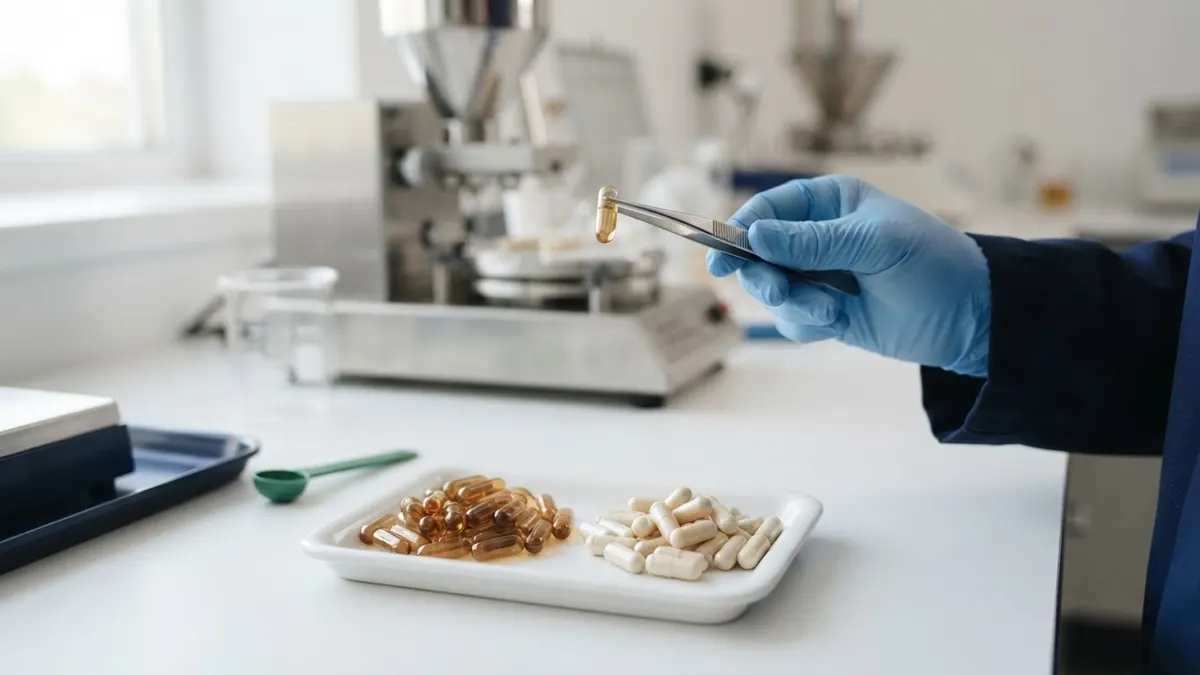
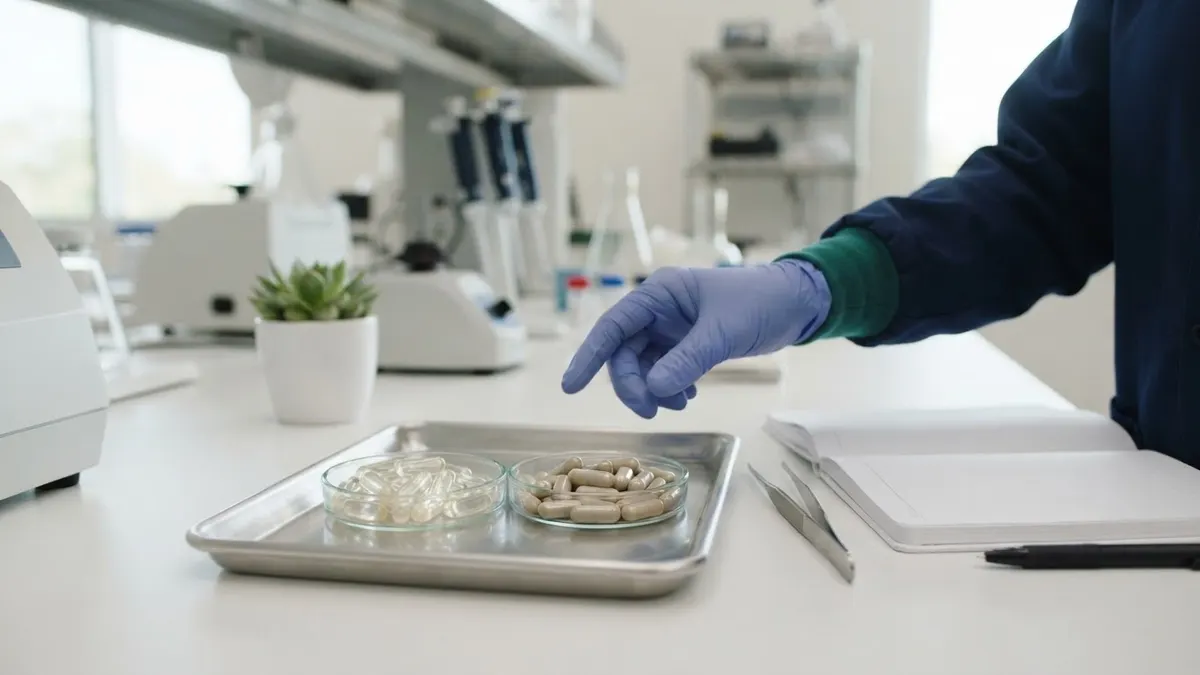
Gelatin capsules are made from animal collagen, while vegetable capsules are usually made from HPMC (hypromellose), a plant-based cellulose. Choose a vegetable shell when your label needs to say vegan or vegetarian, or for many kosher and halal products. Gelatin is a common, cost-efficient choice when those claims are not needed.
The shell is part of your product. It shapes your label claims, how the capsule holds up with your fill, and your cost per bottle. The details at the start matter.
Gelatin vs vegetable capsules compared side by side
| Gelatin capsules | Vegetable (HPMC) capsules | |
|---|---|---|
| Made from | Animal collagen | HPMC, a plant-based cellulose |
| Vegan or vegetarian claim | No | Yes, when the full formula also qualifies |
| Kosher and halal fit | Depends on the gelatin source and certification | Often a simpler fit; certification still required |
| Moisture | Holds more water; can turn brittle with very dry fills | Holds less water; often suits moisture-sensitive powders |
| Typical cost | Often lower | Often higher |
| Best for | Standard powder blends without plant-based claims | Vegan, vegetarian and many kosher or halal products |
Real cost depends on capsule size, run size and your formula. Ask for a quote on your exact product.

Are gelatin capsules vegan?
No. Gelatin comes from animal collagen, so it is not vegan or vegetarian.
A vegan product needs a plant-based shell, such as HPMC or pullulan.
Every ingredient counts. The shell is swallowed with the dose, so it must match the claim on the front of the label. A vegan powder blend in a gelatin capsule is not a vegan product.
Plant-based demand reaches well beyond the shell. For the bigger picture, read our article on animal-free functional ingredients.
Are gelatin capsules safe, and are vegetable capsules good for you?
Both gelatin and vegetable shells are widely used materials for dietary supplement capsules. The shell has one job: to hold and deliver a measured dose. It is not meant to add a health benefit of its own.
From the manufacturing side, the question that matters is quality control. Like every ingredient, the shell should:
- Come from a checked, documented source
- Meet its specification before it goes into production
- Be handled under cGMP rules from receiving to release
For dietary supplements sold in the U.S., cGMP rules sit in 21 CFR Part 111. See how each stage runs in our step-by-step capsule manufacturing process guide.
Questions about health or structure-function wording belong with your regulatory or label advisor. We make the product to its specification. Your advisor helps you word what the label says about it.
Which capsule shell works with moisture-sensitive or oily fills?
What goes inside the capsule shapes which shell holds up best.
- Moisture-hungry powders. Some powders pull water from their surroundings. Gelatin shells hold more water, and a very dry or moisture-hungry fill can draw it out and leave the shell brittle over time. Vegetable shells hold less water, so they often suit these blends.
- Standard powder blends. Both shells are common choices. Label claims and cost usually decide.
- Oily or liquid fills. A standard two-piece capsule is built for powder. Oily or liquid fills usually need a softgel or a sealed capsule instead. Vitalpax also makes softgels.
Shell type, capsule size and capsules per serving are set before encapsulation. Test the fit early with your real blend, so a shell problem shows up in development, not in a full batch.
How does the capsule shell affect your label claims?
The shell either opens up or limits what your label can say.
- Vegan and vegetarian: require a plant-based shell.
- Kosher and halal: depend on both the shell material and the certification behind the finished product.
- Timing: choose the shell before label artwork is final, so the label matches what is actually made.
- Changes after launch: switching shells later can mean new labels and new paperwork.
A claim on the label needs proof behind it. Read why certifications count before you plan a kosher, halal or vegan product.

Choosing a capsule shell with Vitalpax
Vitalpax is a cGMP-compliant contract manufacturer on a multi-building campus in Southern Utah. We make capsules, tablets, softgels, powders, stick packs and liquids for brands under their own labels.
The roles are clear:
- Your brand owns the formula and the label. At the encapsulation step, you choose the shell type, capsule size and capsules per serving. You also set appearance expectations, such as shell color.
- We own the making: ingredient testing, production, packaging and the batch documentation. We also speak up early when a formula or label is likely to cause trouble later.
Tell us the claims you want on the label, and we will confirm which shell options fit your formula and your markets. We work with 7,000+ unique ingredients a year, with in-house R&D and formulation and both large and small batch runs.
Comparing partners? Use our private label supplement manufacturer checklist.
Not sure which shell fits your formula?
Send us your formula and the claims you want on the label. We will flag shell or formula issues early, before they cost time or money.
Talk to the Vitalpax team to request a quote and start your capsule product, from concept to shelf.